
Ecommerce Digital Marketing Agency: When to Hire One in 2026
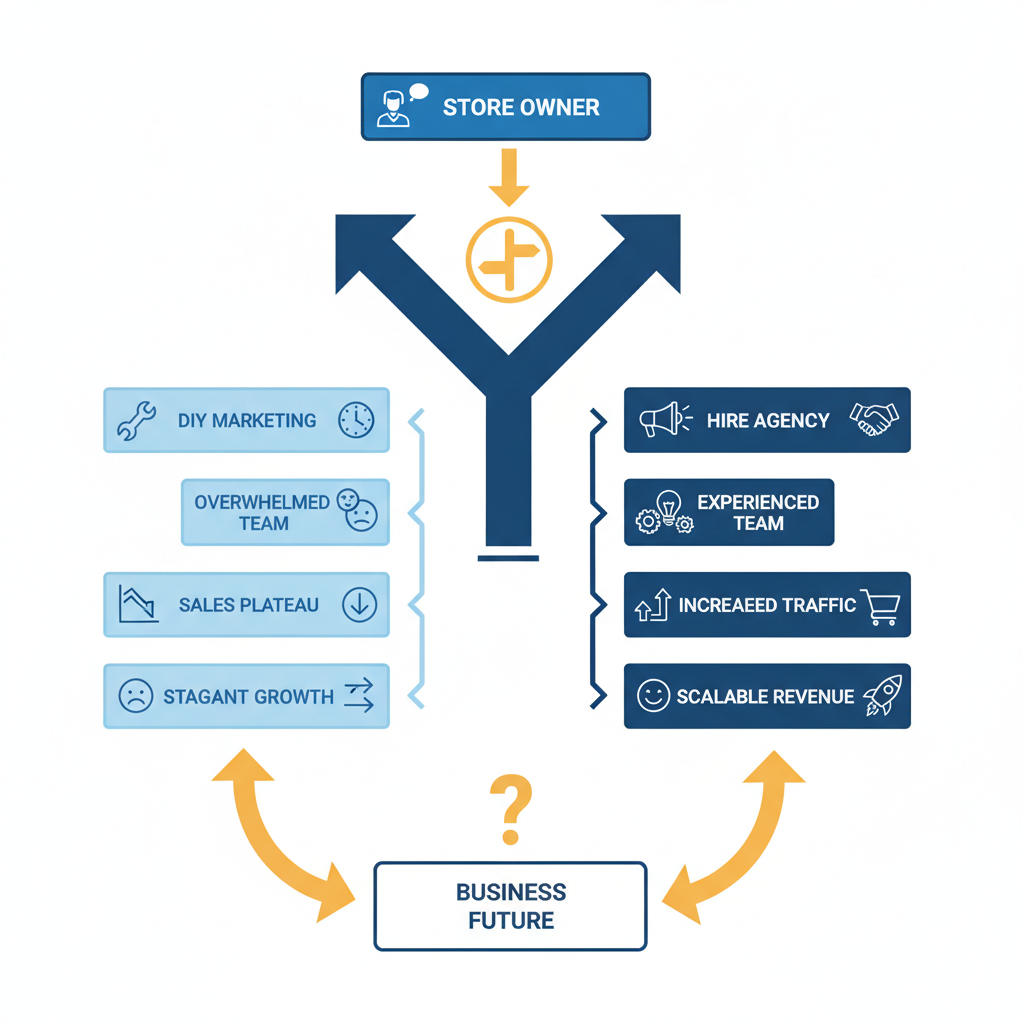
You are running an ecommerce store in 2026, and you are wondering if hiring an ecommerce digital marketing agency is the right move. The answer depends on your current growth stage, team capacity, and how much you value your own time. An ecommerce digital marketing agency can take your online store from a side project to a scalable business by managing the complex, multi-channel marketing that drives consistent sales.
What Does an Ecommerce Digital Marketing Agency Do?
An ecommerce digital marketing agency specializes in driving traffic, conversions, and revenue for online stores. They do this through a mix of paid ads, search engine optimization (SEO), email marketing, and social media management. Unlike a general marketing agency, an ecommerce-focused one understands the unique mechanics of product listings, checkout flows, and customer lifetime value.
In 2026, the best agencies have integrated AI tools into their workflows. They use predictive analytics to forecast which products will sell, personalize ad creatives at scale, and automate bid adjustments on platforms like Google Shopping and TikTok Shop. Their job is to turn your store into a revenue engine while you focus on sourcing products, fulfilling orders, and building your brand.
Here is what a full-service ecommerce agency typically manages for you:
- Paid advertising across Google, Meta, Pinterest, TikTok, and emerging platforms.
- SEO and content strategy to rank product and category pages organically.
- Email and SMS automation for cart recovery, post-purchase upsells, and loyalty programs.
- Analytics and attribution to understand which channels actually drive profit.
- Creative production for ad images, video, and landing page copy.
Signs It’s Time to Hire an Ecommerce Digital Marketing Agency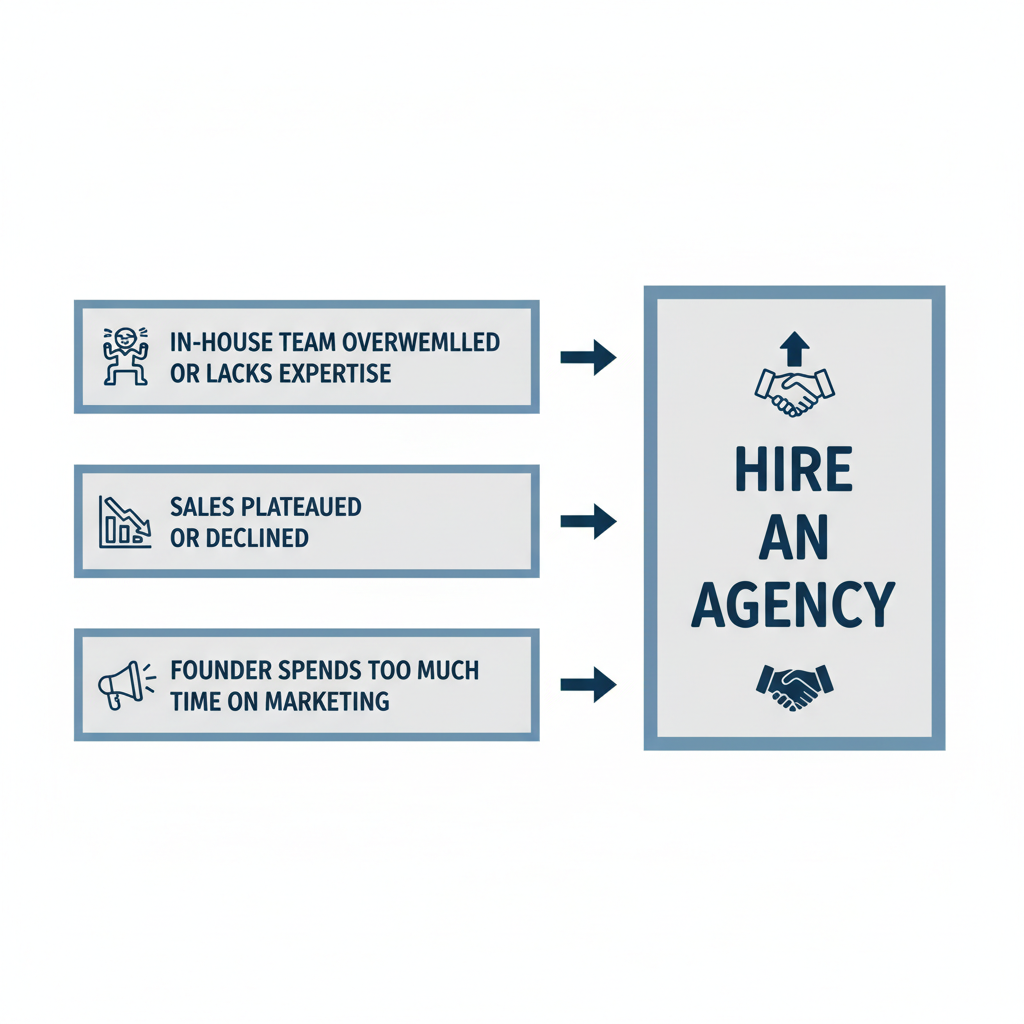
How do you know when you have outgrown DIY marketing? Look for these clear signals.
Your in-house team is overwhelmed or lacks expertise. If your two-person marketing team is juggling TikTok Shop setup, Google Ads optimization, and email flows, something will break. The platforms change constantly. In 2026, AI-driven ad platforms require specific know-how to avoid wasted spend. If your team cannot keep up, an agency fills the gap.
Sales have plateaued or declined despite consistent effort. You are posting on social media, running basic ads, and sending emails. Yet revenue is flat. This usually means your strategy needs a fresh perspective. An agency can audit your funnel, find leaks, and re-engage lost customers with new creative angles or channel expansions.
You are spending too much time on marketing instead of product or operations. As a founder, your highest value work is improving your product and managing your supply chain. If you spend 20 hours a week on ad campaigns and social posts, you are burning time you could invest in growth. An agency takes that load off your shoulders.
How to Choose the Right Agency for Your Online Store
Not every ecommerce digital marketing agency is a good fit. Here is how to vet them.
Look for proven experience in your niche. An agency that has driven results for fashion brands may not understand the subscription box model or B2B ecommerce. Ask for case studies with numbers: revenue increases, ROAS improvements, or cost-per-acquisition reductions. If they cannot show you real results, move on.
Check their tech stack. In 2026, top agencies use advanced tools for automation, A/B testing, and attribution modeling. They should be comfortable with Shopify or BigCommerce APIs, Google Analytics 4, and AI-powered platforms like Albert or Pattern89. Ask which tools they use and why.
Evaluate their communication style and reporting frequency. You need a partner, not a black box. The best agencies provide weekly or bi-weekly reports with clear KPIs. They explain what worked, what did not, and what they plan to change. If they cannot communicate in plain language, the relationship will frustrate you.
Key Services to Expect from a Top Ecommerce Agency
A quality ecommerce digital marketing agency offers a stack of services that work together. Here is what you should expect.
Comprehensive SEO audits and content strategies. This goes beyond keyword stuffing. The agency should optimize your product pages for search intent, build internal links between categories, and create blog content that attracts buyers at the top of the funnel. In 2026, Google's AI-driven search results reward clear, helpful content over keyword density.
Paid advertising management across multiple platforms. You want an agency that runs campaigns on Google, Meta, Pinterest, and emerging platforms like Reddit or LinkedIn, especially if you sell to other businesses. They should use audience segmentation, dynamic creatives, and automated bid strategies to maximize return.
Email and SMS automation flows. Cart abandonment emails are just the start. Top agencies build flows for post-purchase upsells, win-back campaigns for inactive customers, and loyalty programs that reward repeat buyers. Automated SMS is especially effective for time-sensitive offers and shipping updates.
Cost vs. Value: What to Budget for Agency Services
Hiring an ecommerce digital marketing agency is an investment. Here is what you can expect to pay in 2026.
Monthly retainers for full-service agencies range from $3,000 to $20,000 or more. The price depends on your ad spend, the complexity of your campaigns, and the number of channels managed. A smaller agency handling a single channel might charge $3,000 to $5,000 per month. A larger agency managing multi-channel campaigns with creative production can run $10,000 to $20,000.
Performance-based models are becoming more common. Some agencies work on a revenue share or commission basis, taking a percentage of the sales they drive. This aligns their incentives with your growth. However, make sure the contract defines what "attributed sales" means to avoid disputes.
When comparing proposals, factor in setup fees, tool subscriptions, and any minimum ad spend requirements. A cheap retainer with a high ad spend minimum may cost you more in the long run.
DIY vs. Agency: Which Approach Wins in 2026?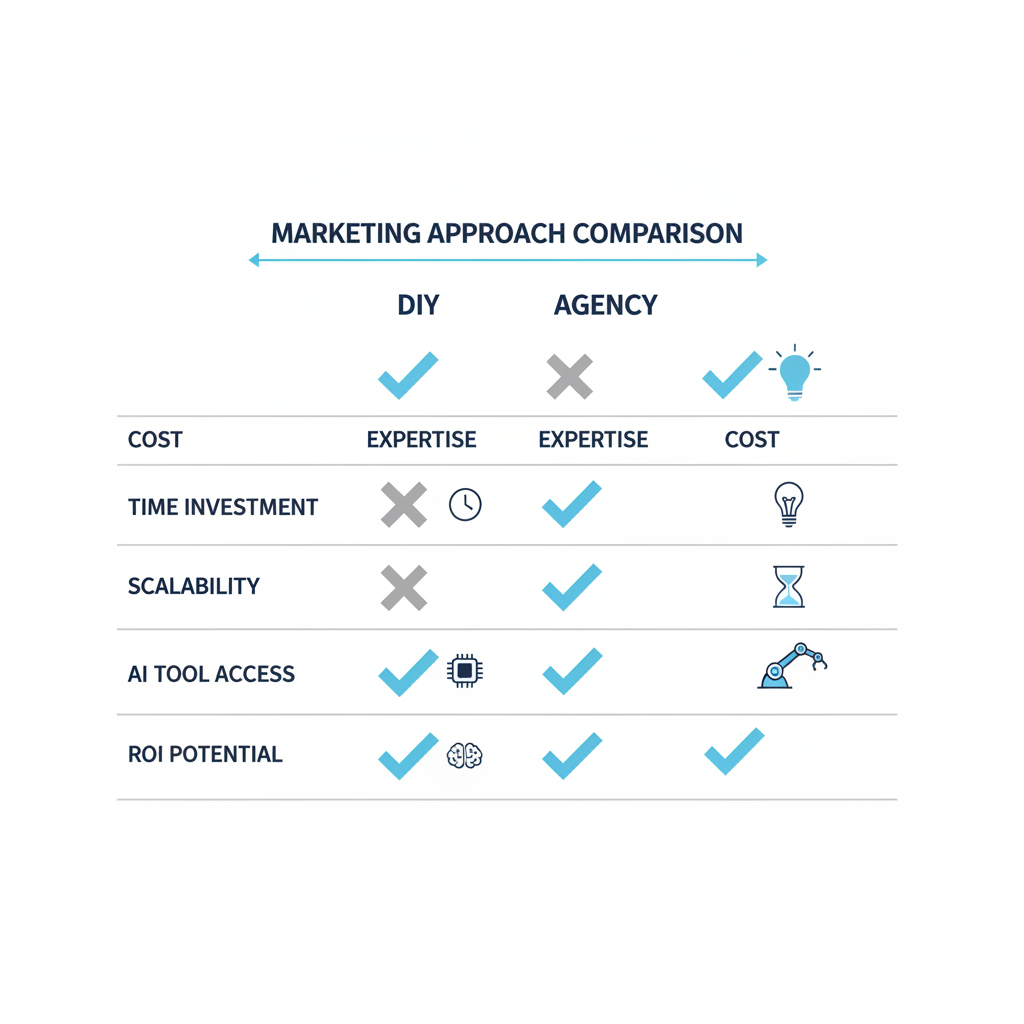
The choice between doing it yourself and hiring an ecommerce digital marketing agency depends on your goals and resources.
DIY works well for solopreneurs and early-stage stores. If you have the time to learn platforms like Shopify's built-in marketing tools or use an automation platform like OneUp Today for automated outreach on Reddit, X, and LinkedIn, you can build momentum without a large budget. DIY gives you full control and zero overhead.
Agencies excel when scaling complex campaigns. If you are managing multiple channels, running high-volume ad spend, or entering new markets quickly, an agency brings the expertise and bandwidth you lack. They can launch campaigns in days that would take you weeks to set up.
Hybrid models let you retain control while accessing specialized help. You might handle organic social and email in-house while outsourcing paid ads and SEO to an agency. This approach keeps costs lower while still getting expert support for high-impact areas.
| Approach | Best For | Cost | Control |
|---|---|---|---|
| DIY | Solopreneurs, early-stage stores | Low (tools + time) | Full |
| Full agency | Scaling stores, complex campaigns | $3,000, $20,000+/month | Shared |
| Hybrid | Growing stores with some in-house skills | Medium (partial retainer) | Balanced |
Red Flags to Avoid When Vetting Agencies
Not every agency will deliver what they promise. Watch for these warning signs.
Guarantees of #1 rankings or instant sales. No ethical agency can guarantee a top spot on Google or a specific sales number. Marketing is probabilistic, not deterministic. Any agency that promises quick fixes is likely using black-hat tactics that will hurt you long-term.
Lack of transparency in reporting. If the agency cannot or will not explain their methods in plain language, that is a red flag. You should know exactly where your money is going and what results it is generating. Insist on dashboard access and regular calls.
Over-reliance on a single channel. An agency that only runs Facebook ads or only focuses on SEO is not building a resilient strategy. Platforms change algorithms, and audiences shift. A good agency diversifies your traffic sources so a single platform change does not tank your revenue.
Next Steps: How to Start Your Agency Search Today
Ready to find the right ecommerce digital marketing agency? Follow these steps.
Define your goals. Are you launching a new store, fixing a declining brand, or scaling an existing success? Your goals determine the type of agency you need. A launch requires brand awareness and traffic. A turnaround needs conversion optimization and customer retention.
Request proposals from 3-5 agencies. Ask for a clear breakdown of services, timelines, and performance metrics. Compare their strategies and see which one aligns with your vision. Avoid agencies that give vague answers or avoid specifics.
Use a trial period or pilot project. Before signing a long-term contract, test the agency with a small campaign or a one-month audit. This lets you evaluate their communication, work quality, and results without a major commitment. A good agency will welcome this approach.
Takeaway: Hiring an ecommerce digital marketing agency is a strategic decision that can accelerate your growth, but only if you choose the right partner. Start by clarifying your needs, vetting candidates carefully, and testing before committing. Your next step: write down your top three marketing challenges and use them as your briefing when you reach out to agencies.
Frequently asked questions
How much does an ecommerce digital marketing agency cost?
Most ecommerce digital marketing agencies charge between $2,000 and $10,000 per month on retainer, depending on scope and platform complexity. Some also offer performance-based pricing, but retainers are most common. For a full-service agency managing ads, SEO, and email, expect to invest at least 10–15% of your monthly advertising spend.
How long does it take for an ecommerce digital marketing agency to show results?
Typically, you need 3–6 months to see meaningful results from an ecommerce digital marketing agency. The first month is for auditing, setup, and baseline optimization. While paid ads can generate immediate traffic, SEO and email automation take longer to compound. Consistent effort and periodic strategy shifts are key to sustained growth.
Can an ecommerce digital marketing agency work with my existing in-house team?
Yes, most agencies act as an extension of your team, collaborating on strategy while handling execution. This works best when you establish clear roles: your in-house staff focuses on brand and products, while the agency manages channel expertise and day-to-day campaigns. Regular alignment meetings prevent overlap and ensure every initiative supports your goals.
What are the benefits of hiring an ecommerce digital marketing agency over in-house hiring?
Agencies offer immediate access to a team of specialized experts, paid media, SEO, email, and analytics, for the cost of one salary. This reduces your hiring and training time, provides scalability during peak seasons, and keeps you on top of rapid platform changes. Plus, agencies use enterprise tools that might be too costly to purchase alone.
How do I measure the ROI of an ecommerce digital marketing agency?
Track your return on ad spend (ROAS), customer acquisition cost (CAC), and overall conversion rate before and after engagement. A strong agency should improve these metrics over time. Also, compare your revenue growth against your total marketing spend, not just agency fees, to see true profitability. Monthly reports should align with these KPIs.