
Marketing Digital: Key Concepts Every Indie Hacker Should Know
What Is Marketing Digital and Why It Matters for Indie Hackers
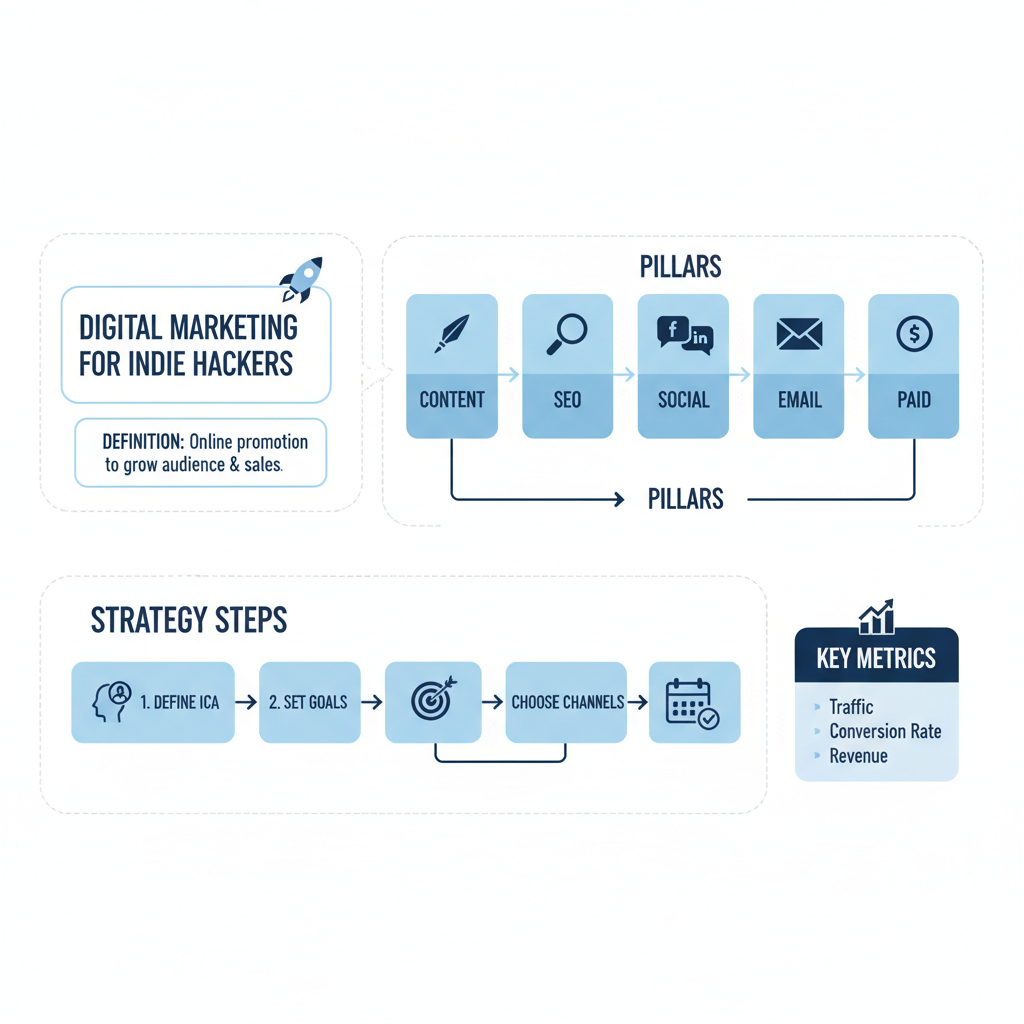
Marketing digital is the practice of using online channels to attract, engage, and convert customers. For indie hackers and SaaS founders, it means leveraging SEO, content, social media, and email to grow a business without a big budget. The core goal is building authentic connections, sharing value on platforms like Reddit, X, and LinkedIn to drive sustainable growth.
Digital marketing levels the playing field. A solo founder with a clear strategy can reach the same audience as a company with a massive ad spend. By focusing on platforms where your target users already hang out, you can start conversations, answer questions, and build trust. This approach turns strangers into loyal customers over time.
The 5 Pillars of Digital Marketing for SaaS Growth
Content Marketing
Create blog posts, guides, and videos that solve real user problems. This establishes authority and drives organic traffic. For example, a project management tool could publish a tutorial on "How to Prioritize Tasks Without Burnout." Each piece should target a specific pain point your ideal customer faces.
Search Engine Optimization (SEO)
Optimize your site and content to rank for relevant keywords. Focus on long-tail phrases like "best email automation for indie hackers" to attract qualified visitors. Ensure fast page loads, proper heading structure, and internal links. SEO delivers consistent free traffic over time.
Social Media Marketing
Engage on platforms where your audience is active. Share insights, answer questions, and build community. On Reddit, contribute to subreddits like r/SaaS or r/indiehackers. On X, join conversations using relevant hashtags. Authentic engagement beats broadcasting promotional messages.
Email Marketing
Nurture leads with personalized sequences. Send onboarding tips, product updates, and exclusive content. A simple welcome email series can boost activation rates. Tools like Mailchimp or ConvertKit make it easy to automate and segment your list.
Paid Advertising
Use targeted ads on Google, LinkedIn, or X when organic efforts need a boost. Start small, test with $100 and measure cost per acquisition. Scale only the campaigns that deliver positive ROI.
How to Build a Digital Marketing Strategy from Scratch
Start by defining your ideal customer avatar (ICA). List their job title, biggest frustration, and where they spend time online. This shapes every message and channel decision.
Set measurable goals using OKRs or SMART criteria. For example: "Increase trial sign-ups by 20% in 3 months through content marketing and Reddit engagement." Clear targets keep you focused.
Choose 2-3 channels to focus on initially. Spreading too thin dilutes your efforts. If your audience hangs out on Reddit and LinkedIn, start there. Master one channel before adding another.
Create a content calendar aligned with product launches and seasonal trends. Plan weekly posts, topics, and repurposing ideas. Consistency builds momentum.
Essential Tools for Indie Hackers to Automate Marketing
| Tool | Purpose | Best For |
|---|---|---|
| OneUp Today | AI-driven lead discovery and content publishing across Reddit, X, LinkedIn | Indie hackers automating outreach |
| BuzzSumo | Trending topics and competitor content research | Content ideation |
| Ahrefs | Keyword research and SEO analysis | Organic traffic growth |
| Mailchimp | Email list management and drip campaigns | Lead nurturing |
| ConvertKit | Email automation for creators | Building audience relationships |
| Canva | Social media visuals and landing page design | Non-designers creating graphics |
| Figma | Collaborative interface and visual design | Teams designing landing pages |
OneUp Today automates the time-consuming parts of social outreach. It discovers leads on Reddit and X based on your target keywords, then schedules authentic posts that engage those communities. This frees you to focus on product development while maintaining a consistent presence.
Content Marketing Tactics That Drive Real Results
Write deep-dive tutorials and case studies that showcase your product solving specific problems. For example, "How We Reduced Churn by 30% Using Automated Onboarding Emails." These pieces attract readers actively searching for solutions.
Repurpose one long-form piece into multiple formats. Turn a blog post into a Twitter thread, a LinkedIn carousel, and a short video. This extends reach without creating new content from scratch.
Guest post on indie hacker blogs or newsletters. This taps into existing audiences and builds backlinks for SEO. Pitch topics that complement their content, not compete with it.
Use storytelling. Share your founder journey, failures, pivots, and wins. This humanizes your brand and makes you relatable. People connect with stories, not feature lists.
Measuring Success: Key Metrics for Digital Marketing
Track website traffic sources using Google Analytics or Plausible. Know which channels drive visitors: organic search, social referrals, or direct visits. This shows where to invest more effort.
Monitor conversion rates from visitor to lead to paying customer. If your blog gets 10,000 visitors but only 10 sign up, optimize your calls-to-action or landing page.
Engagement metrics on social media indicate content resonance. Look beyond likes to comments, shares, and saves. High engagement means your content sparks conversation.
Customer acquisition cost (CAC) and lifetime value (LTV) help optimize spend. If one channel has a CAC of $50 and LTV of $500, scale it. If another has a CAC of $200 and LTV of $150, cut it.
Common Pitfalls and How to Avoid Them
Trying to be everywhere at once is a common mistake. Focus on one or two channels where your audience is most active. Master those before expanding.
Ignoring data leads to wasted effort. Regularly review analytics to double down on what works and cut what doesn't. Let numbers guide decisions, not gut feelings.
Over-automation without personalization hurts authenticity. Use tools like OneUp Today to schedule posts, but engage manually in comments and DMs. Automated replies feel robotic.
Neglecting SEO basics limits organic growth. Ensure your site loads fast, uses proper headings, and targets relevant keywords. A well-optimized page can rank for years.
Next Steps: Launch Your First Digital Marketing Campaign
Pick one channel, LinkedIn, for example, and commit to posting three times per week for 30 days. Share insights, ask questions, and comment on others' posts. Consistency builds visibility.
Set up a simple email capture form on your landing page using Mailchimp or ConvertKit. Offer a lead magnet like a checklist or template in exchange for the email. This starts your nurture sequence.
Use OneUp Today to discover leads on Reddit or X and schedule your first batch of posts. Target subreddits or hashtags where your ideal customers discuss problems your product solves.
After 30 days, review metrics: traffic, engagement, and sign-ups. Adjust your approach based on what worked. Then scale to a second channel.
Takeaway: Digital marketing for indie hackers isn't about big budgets, it's about focused, authentic effort on the right channels. Start with one platform, automate the repetitive parts with tools like OneUp Today, and iterate based on real data. Your next step is to pick a channel and publish your first post today.
Frequently asked questions
How much does digital marketing cost for a small business?
There is no fixed cost; it ranges from $0 for organic efforts to thousands per month for paid ads. A solo founder can start with free tools and content creation, then scale paid campaigns only when organic traction proves ROI.
Is digital marketing effective for B2B SaaS companies?
Yes, it is highly effective for B2B SaaS because it targets decision-makers through content, SEO, and LinkedIn. For example, publishing case studies and whitepapers builds authority and generates qualified leads over time.
What is the difference between digital marketing and traditional marketing?
Digital marketing uses online channels like search engines and social media, while traditional marketing uses offline media like TV and print. Digital allows precise targeting and real-time analytics, making it more cost-effective for indie hackers.
How long does it take to see results from digital marketing?
Results vary, but organic strategies like SEO and content take 3-6 months to show traction. Paid ads can deliver immediate traffic, but building sustainable growth often requires consistent effort over several months.
Do I need a website for digital marketing?
Yes, a website is essential as it serves as your digital hub for conversions and credibility. Even a simple landing page with clear calls-to-action can capture leads and support all other digital marketing efforts.