
Custom Down Detector for Real-Time Website Downtime Alerts

Never Miss a Downtime Again: Building a Custom Down Detector for Your Website
Website reliability is the backbone of any online business. Yet, even the most robust applications can experience unexpected downtimes, often at the worst possible moments. For solo founders and small teams, discovering outages only when customers complain can cost both trust and revenue. Today, we'll explore the journey of building a custom down detector, a proactive solution that keeps you informed and in control, so you can address issues before your users even notice. Inspired by this insightful Twitter post, we'll dive into why this matters, how it works, and the tangible benefits it brings to your workflow.
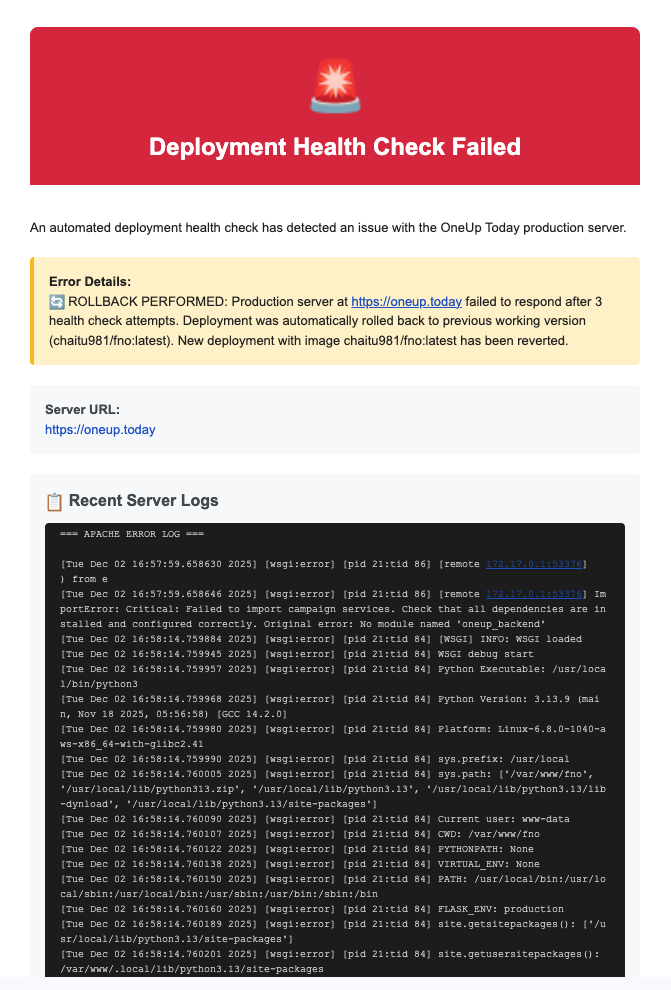
The Problem: Outages You Don’t Know About
For many developers, founders, and product managers, detecting application downtime is a pain point that’s often overlooked, until it’s too late. Imagine pushing a new update, only for your site to crash due to an unforeseen bug or configuration error. Unless you’re constantly monitoring or a user takes the time to report it, you might remain blissfully unaware while potential customers are greeted by error messages or blank screens.
This reactive model has several drawbacks:
- Loss of trust: Users encountering downtime may lose confidence in your reliability.
- Lost revenue: Every minute your app is down could mean missed sales or opportunities.
- Delayed response: Relying on manual checks or user notifications means increased downtime before resolution.
Especially for smaller teams or solo founders, the lack of automated monitoring creates unnecessary vulnerability. It’s not just about uptime, it’s about maintaining your brand’s reputation and keeping operations smooth.
The Solution: Proactive Down Detection & Automated Recovery
Inspired by a real-world need, a custom down detector script was built to solve this challenge. The concept is simple but powerful: automatically check if your website or application is live after every update (or at regular intervals), and act immediately if something goes wrong.
Here’s how this approach transforms the typical workflow:
- Automated health checks: After each deployment or on a set schedule, a script pings your server or performs a key transaction to verify everything is working as expected.
- Immediate rollback: If the check fails, indicating the site is down or error-prone, the script automatically reverts to the previous stable version.
- Alerting the owner: The system sends an email notification, ensuring you’re aware of incidents instantly (instead of waiting for user complaints).
This hands-off monitoring means you’re always the first to know about issues, giving you a chance to resolve them before they impact your user base.
Real-World Scenarios Where This Shines
- Scenario 1: You deploy a new feature late at night. An unforeseen dependency issue brings your site down. The down detector rolls back the update and emails you, so you wake up to a functional site instead of angry messages.
- Scenario 2: During a busy product launch, a surge in users triggers an edge-case bug. The health check catches the error, rolls back, and you’re notified in real time, minimizing disruption.
- Scenario 3: You’re away from your desk for the weekend. A routine update fails, but the script handles it automatically, so you don’t return to a pile of support tickets.
How It Works: Technical Approach Made Simple
The custom down detector is designed for simplicity, reliability, and speed. Here’s a breakdown of the core process:
- Automated Checks: After each code update or on a regular interval, a script initiates an HTTP request (or runs a test transaction) to verify the website’s responsiveness and core functionality.
- Failure Detection: If the server returns an error, times out, or fails specific health checks, the script flags it as a failure.
- Rollback Mechanism: On failure, the script triggers a rollback process, such as redeploying the previous version from source control or restoring from a backup. This minimizes downtime and restores service automatically.
- Alerting System: An email notification is sent to the website owner (or team) detailing the issue, so you’re informed instantly and can investigate the root cause at your convenience.
This approach leverages lightweight scripting (e.g., Bash, Python, Node.js) and integrates with your deployment pipeline (CI/CD), ensuring minimal overhead. It’s highly customizable, health checks can be tailored to your application’s needs, and notification channels (SMS, Slack, etc.) can be added as required.
By referencing the original inspiration, see the original post here, you can see how even a straightforward solution can make a dramatic operational difference.
Benefits & Outcomes: Proactive Reliability, Happier Users
Adopting a custom down detector yields tangible improvements, especially for small teams and solo founders who can’t afford 24/7 monitoring. Here’s what you gain:
- Peace of Mind: Know immediately if something goes wrong, without relying on third-party services or customer reports.
- Reduced Downtime: Automated rollbacks mean your site is restored within seconds or minutes, not hours.
- Improved Trust: Users encounter fewer outages, and you can communicate proactively when incidents do occur.
- Operational Efficiency: Free up your time and mental bandwidth to focus on building features, not firefighting outages.
Ultimately, this system puts you back in control, helping you deliver a more reliable product and a better user experience.
Take Action: Build Your Own or Start Monitoring Today
Downtime is inevitable, but being unprepared isn’t. By implementing a custom down detector, you can catch issues early, recover automatically, and keep your users happy. For developers and founders, this is a practical step toward operational excellence, one that pays dividends in uptime, trust, and peace of mind.
If you’re inspired by this approach, check out the original Twitter post for more context, or start experimenting with your own monitoring scripts today. Proactive reliability is within reach, make it part of your workflow and never miss a downtime again.
Related articles
💬 Find customers on Reddit
Your next customer is on Reddit right now
OneUp Today finds people asking for a product like yours, drafts the DM or reply in your voice, and you approve every send.
$1 free credit · No card, no subscription · Leads in under 60 seconds