
What to Expect from Digital Marketing Specialist Jobs
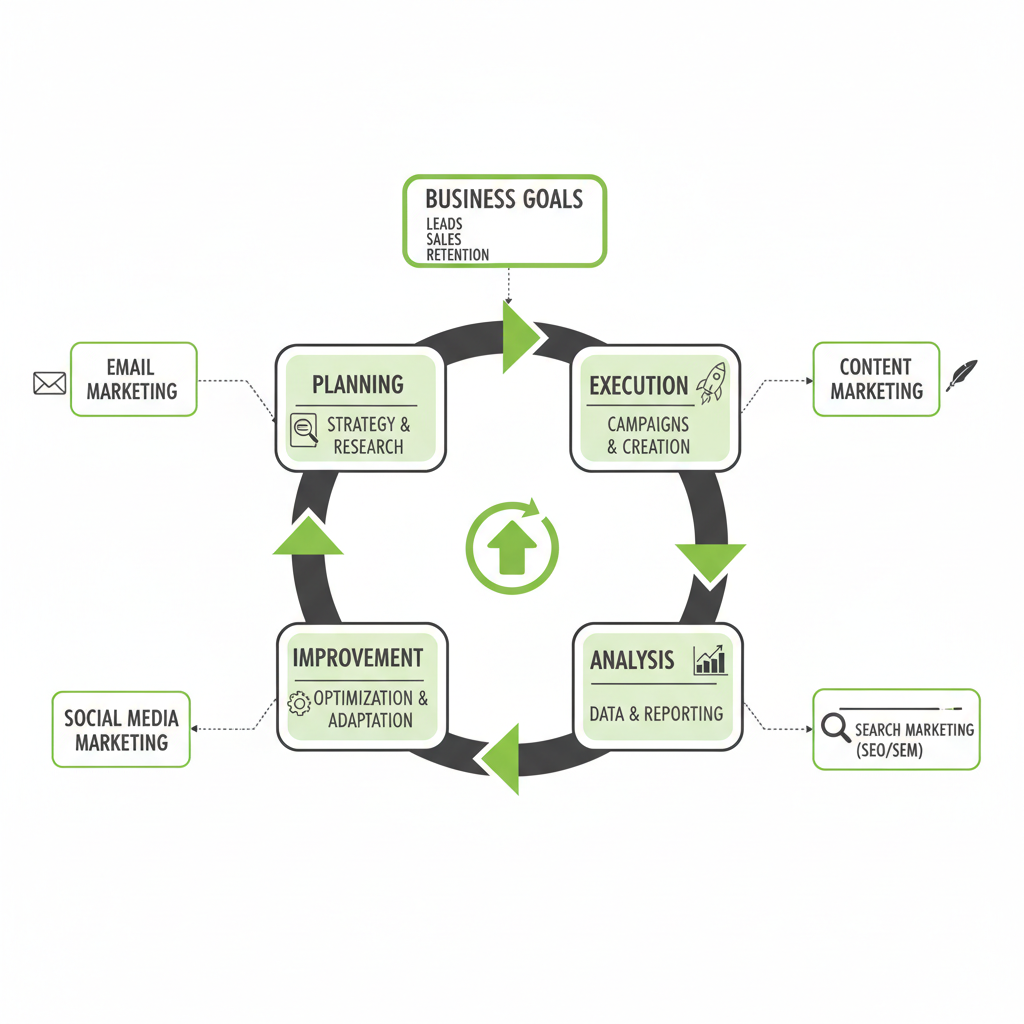
Digital marketing specialist jobs combine campaign planning, hands-on execution, analysis, and ongoing improvement across online channels. You might create content in the morning, adjust an email workflow after lunch, and finish the day explaining how those activities support leads, sales, or retention.
The title sounds straightforward. The actual scope can vary widely, so knowing what to expect helps you choose roles with clear goals, realistic resources, and room to grow.
Key takeaways
- Expect a mix of creative work, campaign execution, analysis, and stakeholder communication.
- Strong specialists connect every task to a business objective rather than simply publishing more content.
- Employers value proof of judgment, such as campaign briefs, dashboards, experiments, and portfolio samples.
- AI can accelerate research, drafting, repurposing, and lead discovery, but human review remains essential.
- Evaluate each role by its ownership, resources, approval process, and definition of success.
What Is a Digital Marketing Specialist Job?
A digital marketing specialist plans, executes, and improves online campaigns that support goals such as brand awareness, qualified leads, sales, product adoption, or customer retention.
Unlike a channel-specific SEO specialist or paid media buyer, a digital marketing specialist often works across several channels. You may manage email, content, search, social media, website updates, and campaign reporting while owning a defined outcome.
Creative production: Write landing pages, emails, social posts, ads, and campaign briefs.
Campaign execution: Configure publishing schedules, audience segments, automation rules, and tracking.
Analysis: Review what happened, identify likely causes, and recommend the next action.
Collaboration: Coordinate with sales, product, design, leadership, customers, or external partners.
Experimentation: Test messages, offers, channels, and conversion paths without losing sight of the business objective.
The role rewards range, but range does not mean doing random tasks. Good digital marketing specialist jobs give you clear priorities and enough ownership to improve results over time.
Core Responsibilities and Typical Workday
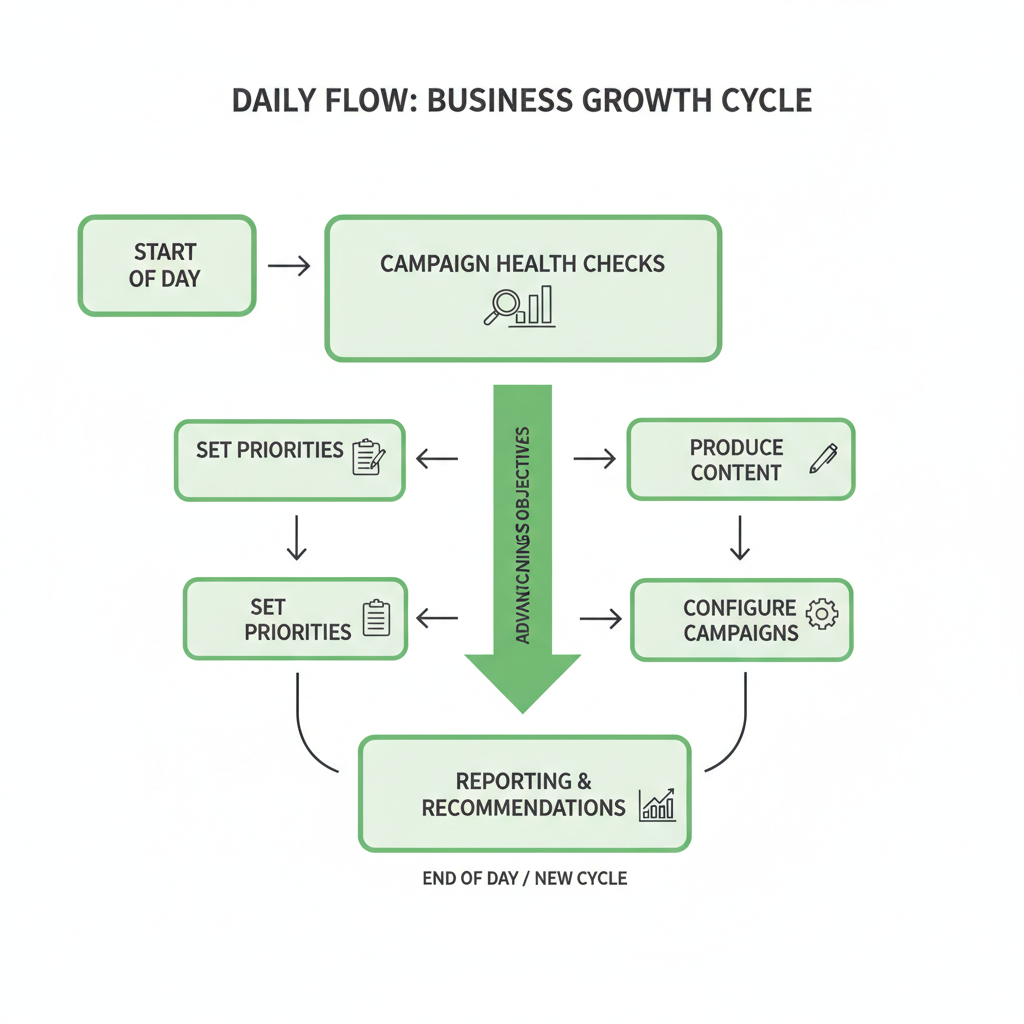
Your recurring work usually starts with campaign health. Check whether forms work, scheduled content published correctly, emails reached the intended segment, and active campaigns are producing useful responses.
You may also update website copy, manage a content calendar, prepare reports, and respond to stakeholder requests. Project-based work can include launching a landing page, building an email sequence, researching keywords, or testing a new ad or outreach message.
A sample day
- Review performance: Inspect campaign data, lead quality, website behavior, and replies. Flag anything that needs immediate action.
- Set priorities: Choose the tasks most closely connected to the current goal, such as generating demo requests or improving onboarding.
- Produce content: Draft a landing page, email, community reply, or search-focused article.
- Configure campaigns: Set targeting, links, tracking, automation rules, and approval steps.
- Report and recommend: Explain what changed, what you learned, and what the team should do next.
The crucial distinction is between completing activities and advancing an objective. Publishing several posts is an activity. Publishing posts aimed at a specific customer problem, tracking relevant conversations, and improving the message based on responses is marketing.
Channels, Tools, and AI Workflows
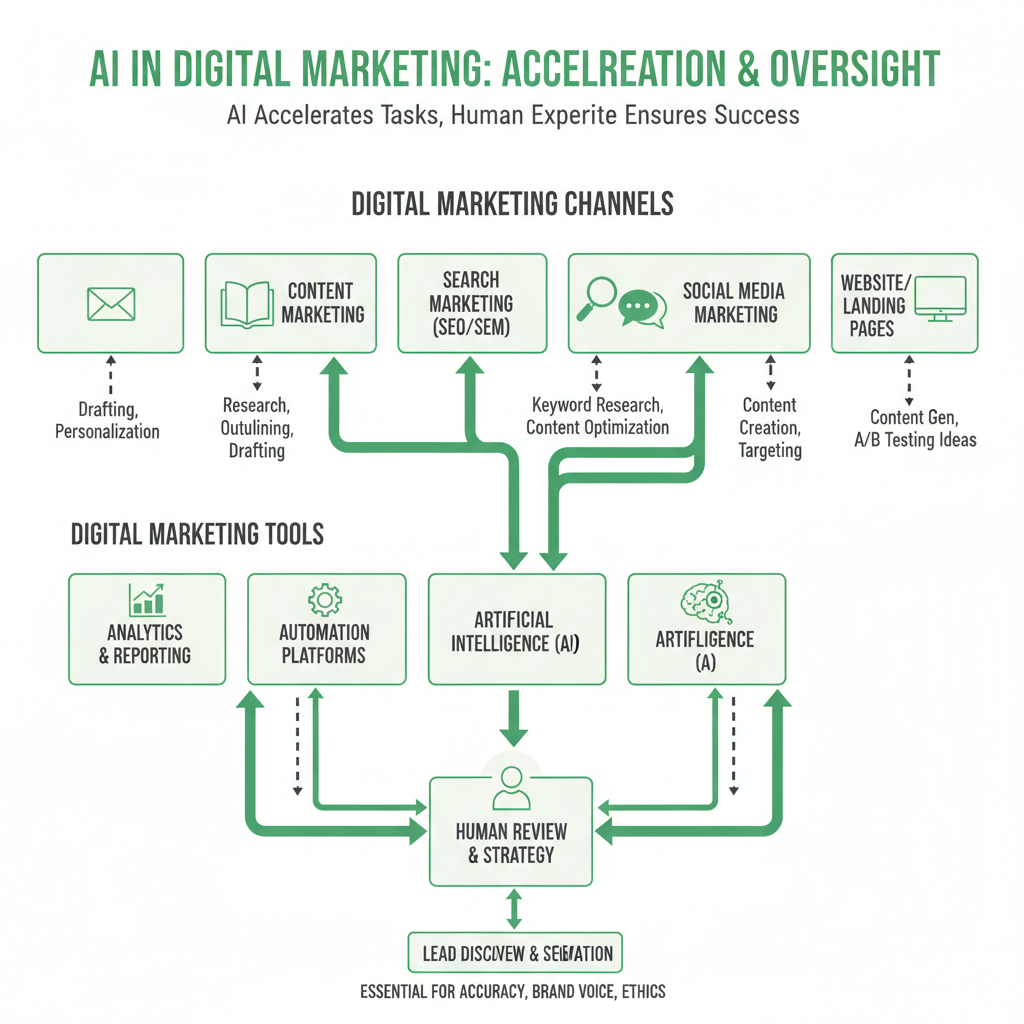
A digital marketing specialist may work across search, email, social media, paid advertising, content, website conversion, and online communities. The exact mix depends on where customers discover solutions and how they make buying decisions.
Tools are easier to understand when you group them by purpose:
- Analytics: Measure traffic, actions, campaign paths, and conversions.
- Customer relationship management: Store lead details, conversations, lifecycle stages, and sales activity.
- Content management: Create and update website pages or blog posts.
- Email automation: Segment contacts, trigger sequences, and manage follow-ups.
- Keyword research: Find search topics and assess customer intent.
- Design: Produce campaign graphics, layouts, and reusable assets.
- Project tracking: Assign work, manage deadlines, and document approvals.
AI agents can support lead discovery, initial research, message drafting, content repurposing, SEO workflows, and website conversations. Your job is not merely to generate more material. Review accuracy, relevance, tone, timing, and brand fit before anything important goes live.
Example: From Reddit discussion to qualified conversation
- Find intent: Identify a discussion where someone is actively asking for help with a problem your product addresses.
- Check relevance: Read the full thread, the community rules, and the poster’s stated constraints.
- Draft a useful reply: Answer the question directly before mentioning a product or next step.
- Review and approve: Confirm that the response sounds human, avoids unsupported claims, and fits the community.
- Track the conversation: Record replies, direct messages, qualified interest, and any follow-up needed.
OneUp Today supports this workflow by finding high-intent Reddit discussions, drafting personalized replies and outreach, and keeping a person in control of every send. That gives a specialist leverage without handing brand judgment entirely to automation.
Skills and Qualifications Employers Look For
Employers usually assess both technical ability and transferable judgment. Tools matter, but knowing why and when to use them matters more.
Technical skills
- Campaign setup: Build audiences, workflows, publishing schedules, and tracking structures.
- Analytics interpretation: Move beyond reporting numbers and explain what action the team should take.
- SEO: Match content to search intent, structure pages clearly, and improve discoverability.
- Copywriting: Turn customer problems into clear messages, offers, and calls to action.
- Marketing automation: Design workflows that respond to customer behavior without creating impersonal experiences.
Transferable skills
Look for ways to demonstrate prioritization, communication, curiosity, quality control, and commercial judgment. You should understand customer intent, funnel stages, brand voice, and the connection between marketing indicators and business outcomes.
A portfolio can provide stronger evidence than a list of tools. Include campaign briefs, sample landing pages, email sequences, content pieces, dashboard mockups, and experiment plans. Explain the audience, objective, constraints, decisions, and next step for each sample.
Do not fabricate campaign results. Label personal projects and mock campaigns, then show how you would measure and improve them.
Where Digital Marketing Specialists Work
Digital marketers work in-house, at agencies, within startups, as freelancers, and on distributed teams. Each environment changes your scope, pace, client exposure, and level of ownership.
| Environment | What to expect | What to clarify |
|---|---|---|
| In-house | Deeper knowledge of one brand, product, and customer journey | Team support, channel ownership, and advancement paths |
| Agency | Multiple clients, varied industries, frequent deadlines, and more presentation work | Client load, reporting expectations, and specialist support |
| Startup | Broad scope, rapid priority changes, and direct access to product or leadership | Resources, decision authority, and the primary growth objective |
| Freelance | Control over clients and methods, plus responsibility for sales and administration | Project boundaries, payment terms, and approval ownership |
| Remote team | Written communication, asynchronous coordination, and documented workflows | Working hours, feedback cycles, and access to stakeholders |
A generalist may oversee the complete journey from discovery to retention. A specialist might focus only on organic search, lifecycle email, paid acquisition, or conversion. Neither path is automatically better. Choose based on whether you want broad business exposure or deep channel expertise.
Ask who sets strategy, who approves work, what campaign resources are available, and which outcomes you own. Also ask whether you can access design, development, sales, and product support. A simple landing page test becomes difficult when nobody has permission or capacity to publish it.
Pay, Performance Goals, and Career Progression
Compensation for digital marketing specialist jobs depends on role scope, channel expertise, location, employment type, and the commercial impact you are expected to create. A role owning demand generation and campaign strategy will usually be evaluated differently from one focused mainly on publishing and coordination.
Performance goals may include:
- Qualified leads: Are campaigns attracting people with a relevant problem and realistic buying intent?
- Conversions: Do visitors, subscribers, or leads take the intended next action?
- Acquisition efficiency: Does the value of the outcome justify the time and campaign resources used?
- Organic visibility: Can the right audience discover useful pages through search?
- Engagement quality: Are people starting meaningful conversations rather than producing shallow reactions?
- Retention outcomes: Do campaigns help customers adopt, continue using, or return to the product?
Career paths can lead into channel leadership, growth marketing, demand generation, content strategy, marketing operations, consulting, or team management.
Advancement usually follows increased ownership. Learn to define the objective, coordinate contributors, select the right tools, supervise AI workflows, and explain what should happen next. The person who can connect campaign details to commercial outcomes becomes useful beyond a single channel.
How to Find and Evaluate Digital Marketing Specialist Jobs
Search beyond one title. Related positions include digital marketing coordinator, growth marketer, demand generation specialist, content marketer, lifecycle marketer, and marketing automation specialist.
Then use a focused application process:
- Choose your role focus: Decide whether you want a generalist job or deeper responsibility in content, search, email, paid acquisition, automation, or community marketing.
- Audit your skill gaps: Compare several relevant job descriptions. Separate repeated requirements from one employer’s unusual wish list.
- Build matching samples: Create a campaign brief, landing page, email sequence, content plan, dashboard, or experiment proposal aligned with the target role.
- Tailor your resume: Describe objectives, ownership, decisions, and outcomes. Avoid presenting a long list of disconnected tasks.
- Prepare campaign stories: Be ready to explain the problem, audience, constraints, actions, evidence, and what you would change next.
Questions to ask in an interview
- What would successful performance look like in this role?
- Which channel or customer journey stage needs immediate attention?
- Who approves campaigns, and how long does approval usually take?
- Which marketing activities already work well?
- What creative, technical, and data support is available?
- Where does automation fit, and which actions require human approval?
- How are marketing priorities chosen when several teams make requests?
Watch for unclear goals, unlimited responsibilities, no decision-making authority, or expectations disconnected from the available resources. If an employer wants rapid experimentation but every change requires a long approval chain, ask how that conflict is handled.
Short takeaway: The right role gives you a defined objective, practical resources, and enough ownership to learn from your work. Your next step is simple: choose one target job description and build a small campaign sample that proves how you think.
If you want hands-on practice with AI-assisted lead discovery, outreach drafting, content publishing, and SEO workflows, explore how OneUp Today keeps human approval at the center of execution.
Frequently asked questions
What qualifications do I need for a digital marketing specialist job?
Typically a bachelor's degree in marketing or a related field and 1-3 years of experience. Employers also value practical skills like campaign management and analytics, often demonstrated through a portfolio or case studies.
How much does a digital marketing specialist make?
The average salary ranges from $50,000 to $75,000 annually in the US, varying by location, industry, and experience. Entry-level roles start lower, while senior specialists with proven results can earn more.
Is a digital marketing specialist a good career?
Yes, it offers strong job growth and diverse skill development. The U.S. Bureau of Labor Statistics projects 10% growth for marketing roles, and specialists gain expertise across multiple channels, making them valuable to employers.
What is the difference between a digital marketing specialist and a generalist?
A specialist focuses on specific channels like SEO or paid ads, while a generalist covers multiple areas. However, many digital marketing specialist roles actually require generalist skills, as noted in the article.