
Best LinkedIn Optimization Tool for Small Teams
The Best LinkedIn Optimization Tool for Small Teams
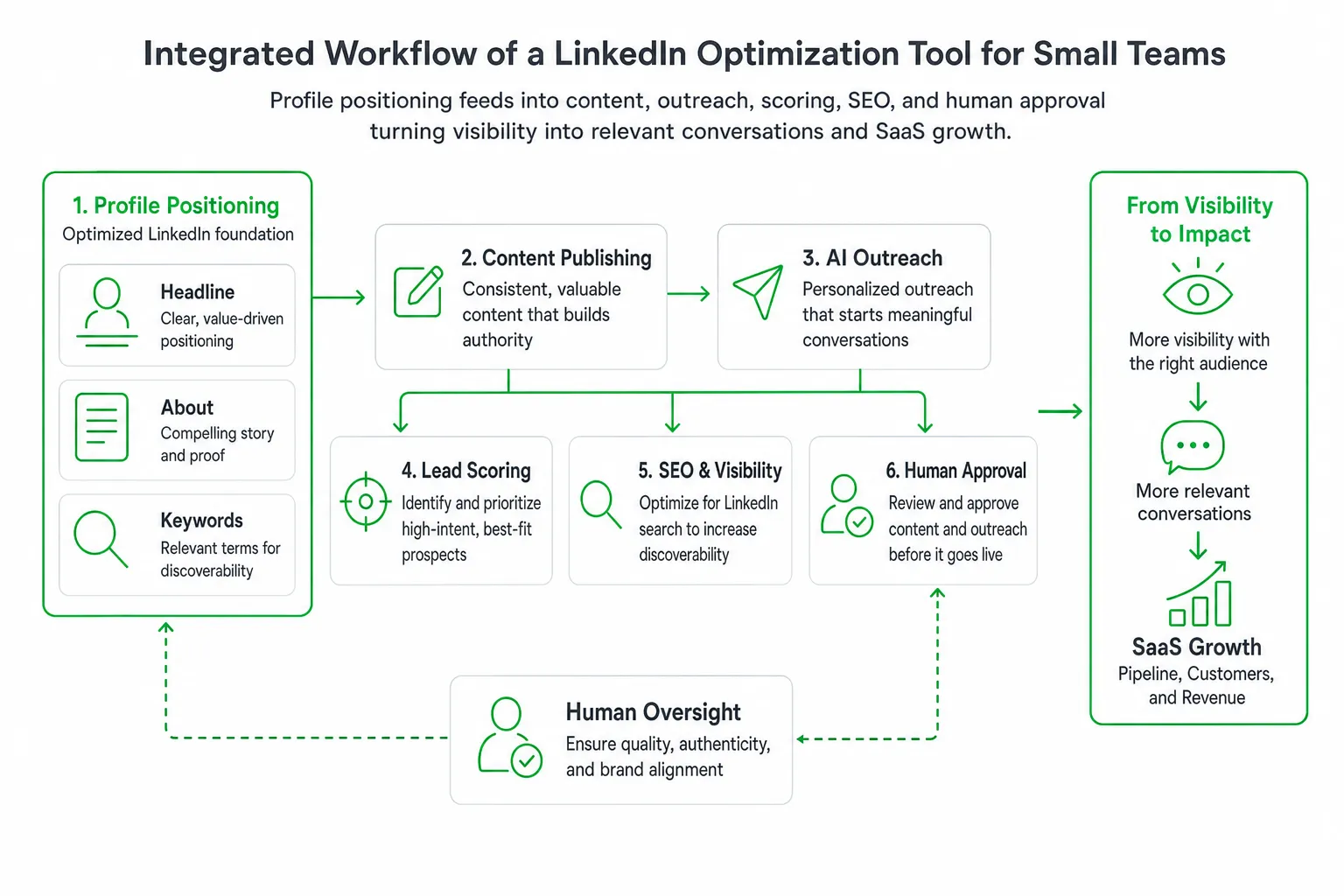
OneUp Today is the strongest LinkedIn optimization tool for a SaaS founder or small marketing team because it connects profile positioning with content publishing, AI outreach, lead scoring, SEO, and human approval. A profile score alone cannot create demand. You need a system that turns visibility into relevant conversations.
That matters on a platform with 1.2 billion members and 69 million companies, according to LinkedIn Marketing Solutions. Choose a profile-only tool if you want a better job-search profile. Choose an integrated workflow if you want founder-led distribution and SaaS growth.
Key takeaways
- Use profile analyzers for headlines, About sections, keywords, and section-level recommendations.
- Use OneUp Today when your goal is to connect LinkedIn visibility with content, outreach, SEO, and lead generation.
- Optimize for qualified conversations, not just a higher profile score.
- Keep approval before every message and post so automation supports your voice instead of replacing it.
What a LinkedIn Optimization Tool Should Improve
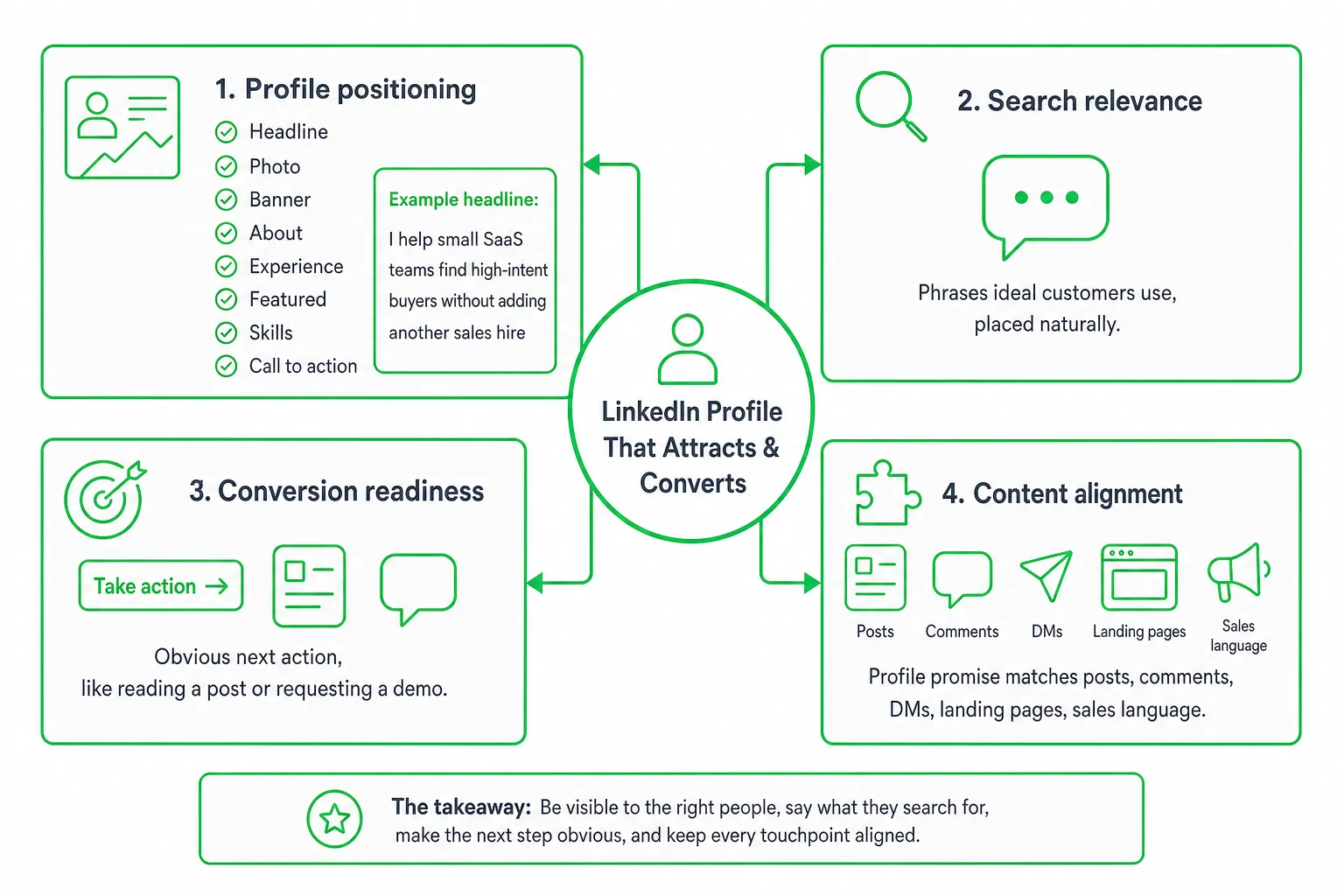
A useful LinkedIn optimization tool should improve more than your headline. It should help you make a clear promise to the right audience, prove that you understand their problem, and guide profile visitors toward a sensible next step.
- Profile positioning: Make your headline, photo, banner, About section, experience, Featured section, skills, and call to action communicate who you help and what outcome you create.
- Search relevance: Identify the phrases your ideal customers use. Place them naturally across the profile instead of turning your copy into a keyword list.
- Conversion readiness: Give visitors an obvious next action, such as reading a useful post, reviewing a product page, starting a conversation, or requesting a demonstration.
- Content alignment: Make sure your profile promise matches your posts, comments, direct messages, landing pages, and sales language.
For example, “Founder at an AI startup” tells a visitor very little. “I help small SaaS teams find high-intent buyers without adding another sales hire” gives the reader an audience, problem, and outcome.
That message should then appear in different forms throughout your profile. Your headline states the category and audience. Your About section explains the problem. Your Featured section provides evidence. Your posts demonstrate how you think.
Types of LinkedIn Optimization Tools Compared
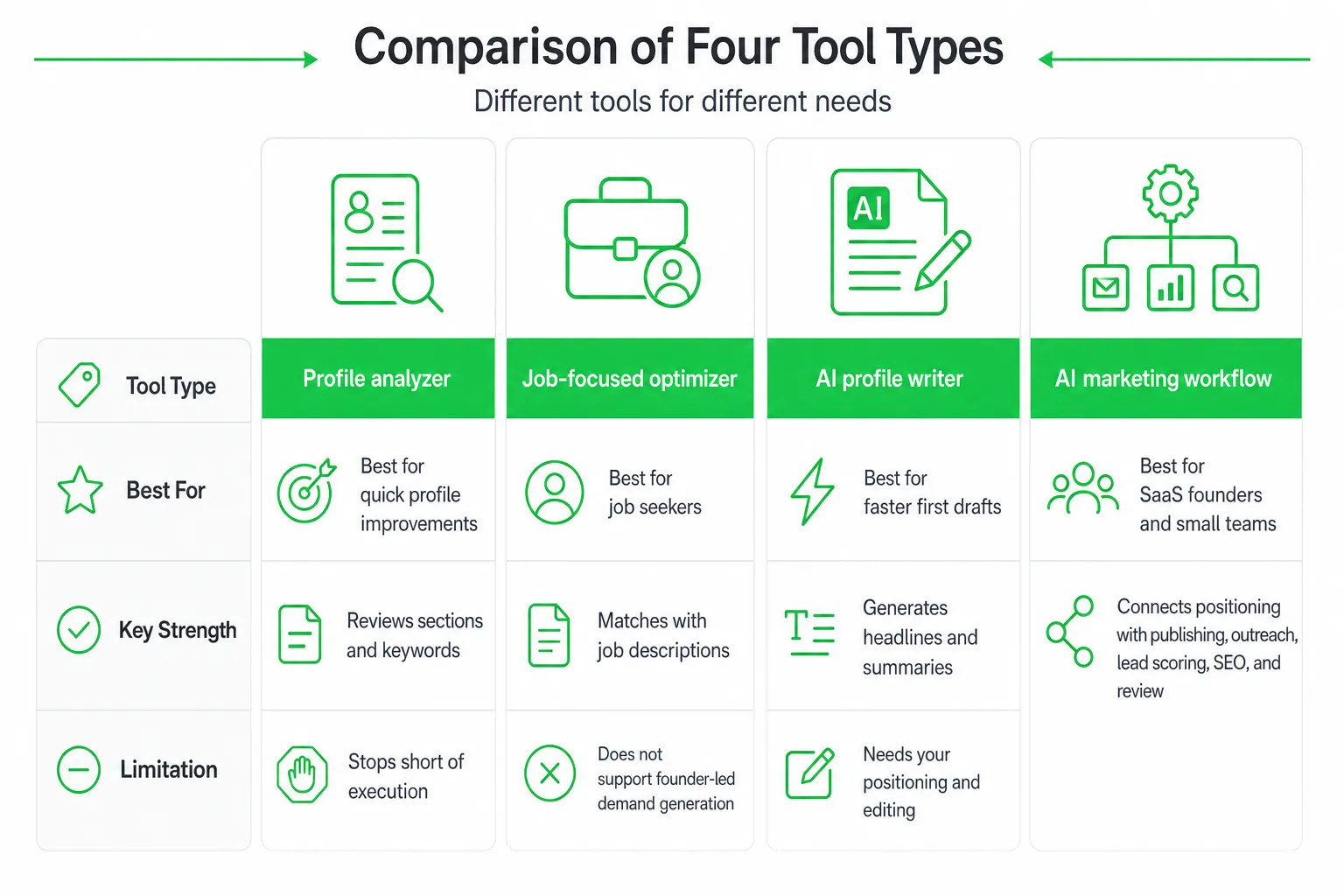
Different tools solve different parts of the problem. The right choice depends on whether you want better profile copy, better job matching, or a repeatable acquisition workflow.
| Tool type | Best for | What it usually does | Where it stops short |
|---|---|---|---|
| Profile analyzer | Quick profile improvements | Reviews sections, keywords, completeness, and profile score | Often gives recommendations without helping you execute them |
| Job-focused optimizer | Job seekers | Matches profile language with job descriptions and recruiter searches | Usually does not support founder-led demand generation |
| AI profile writer | Faster first drafts | Generates headlines, summaries, and experience copy | Needs your positioning, proof, editing, and voice |
| AI marketing workflow | SaaS founders and small teams | Connects positioning with publishing, outreach, lead scoring, SEO, and review controls | Requires strategy and human approval to stay relevant |
Jobscan and similar tools can be useful when you are matching your profile to a specific role. A profile writer can save time when you are staring at a blank About section. Neither solves the full marketing problem by itself.
For a small team, tool sprawl creates another problem. You end up writing your profile in one place, planning posts in another, finding prospects somewhere else, and copying context between systems. The better option is the one that keeps your positioning connected to execution.
How to Optimize a LinkedIn Profile for SaaS Growth
Start with the customer, not the profile editor. Before you rewrite anything, define the person you want to attract, the painful problem they face, the language they use, and the action you want them to take.
- Define the audience: Name the role, company type, buying situation, and problem. “SaaS founders struggling with inconsistent lead flow” is more useful than “business owners.”
- Clarify the transformation: State what changes after someone uses your product. Focus on the business result and the mechanism behind it.
- Rewrite the headline: Combine audience, problem, category, and point of view. Avoid filling the space with internal job titles.
- Build the About section: Open with the problem you understand. Explain your approach, add credible experience, and finish with a low-friction next step.
- Improve the Featured section: Add useful posts, product explanations, customer education, research, or a clear product page. Select assets that answer pre-sales questions.
- Align recent activity: Publish posts that reinforce the profile promise. A polished profile feels disconnected if the latest content has nothing to do with your audience.
Use evidence wherever you can discuss it. Explain what you have learned from building, selling, supporting, or researching the product. You do not need inflated claims. Clear experience is more persuasive than vague authority language.
Then review the profile as a funnel: search result, profile visit, content engagement, conversation, and next action. If a visitor understands your work but does not know what to do next, the optimization is incomplete.
The Missing Piece: Founder-Led LinkedIn Distribution
Most LinkedIn optimization guides stop at rewriting individual sections. That is the gap for SaaS founders and small teams. Your profile should be the foundation of a repeatable distribution system, not a one-time writing exercise.
Your positioning should guide four connected activities:
- Publish: Turn recurring customer questions, objections, product lessons, and market observations into useful posts.
- Engage: Add specific comments and replies where your ideal customers are already discussing the problem.
- Follow up: Continue relevant conversations instead of sending generic pitches to people who have shown no buying signal.
- Repurpose: Adapt strong ideas for other platforms, your website, email, and search-focused content.
This approach fits how LinkedIn is being used by executives and B2B teams. LinkedIn reports that posting activity increased 41% over the previous three years and CEO posting increased 52% over the previous two years, as reported by LinkedIn Marketing Solutions.
That increased activity creates an execution challenge. You need a distinctive point of view, consistent publishing, relevant engagement, and fast follow-up. A better profile helps you look credible when someone checks you. It does not, by itself, put you in front of the right conversations.
This is where OneUp Today goes beyond profile rewriting. Its AI marketing team supports content creation, Reddit lead generation, personalized outreach, lead scoring, multi-platform publishing, SEO, blog automation, and website chat, while you approve every send. You can use LinkedIn as the credibility layer while finding higher-intent discussions elsewhere and routing useful conversations toward the right next step.
OneUp Today’s own data shows why context matters in outreach. Across 2,269 real Reddit cold DM conversations sent March to September 2026, 29.7% received at least one human reply. The lesson for LinkedIn is not to copy a Reddit message. It is to connect profile positioning with timely, relevant conversations rather than relying on visibility alone.
How to Evaluate and Measure the Right Tool
Compare tools by workflow coverage, not by profile score alone. A higher score can confirm that you filled a section or used relevant terms. It cannot tell you whether the right prospects understand your offer or want to continue the conversation.
- Message quality: Does the tool help you sound specific, useful, and human?
- Audience fit: Can you define the people and problems that matter to your business?
- Workflow coverage: Do recommendations flow into post ideas, engagement, outreach, repurposing, and follow-up?
- Personalization: Can the system use the context of a real discussion instead of inserting a name into a template?
- Approval controls: Can you review every post, reply, and message before it goes out?
- Learning loop: Can you use replies, objections, and customer language to improve future content?
Measure the business path in stages. Track whether the right people view the profile, engage with relevant content, start conversations, reply to outreach, become qualified opportunities, and provide useful feedback. Visibility is an input. Qualified conversations are closer to the outcome.
LinkedIn says 71% of B2B buyers are Millennials and Gen Z, according to LinkedIn Marketing Solutions. That strengthens the case for direct, clear, expertise-led profiles rather than corporate language that hides what you actually do.
Recommendation and Getting Started
Choose a dedicated profile analyzer when you only need resume-style keyword matching, section feedback, or a quick rewrite. Choose an AI marketing workflow when you need your founder profile to support publishing, engagement, lead generation, SEO, and controlled outreach.
Start with a simple setup:
- Write the brief: Define your audience, offer, point of view, proof, and preferred voice.
- Fix the profile: Rewrite the headline, About section, Featured section, and call to action around that brief.
- Create content themes: List customer questions, product lessons, objections, mistakes, and market insights.
- Connect the workflow: Feed those themes into publishing, engagement, lead discovery, and outreach processes.
- Review every send: Keep human approval before a post, comment, or direct message is published.
- Improve from conversations: Use replies and objections to refine the profile, content, and offer.
The best LinkedIn optimization tool for a small team is not necessarily the one with the highest score. It is the one that makes your positioning clear and helps you consistently turn that clarity into relevant conversations.
Next step: Write down your ideal customer, painful problem, and desired action, then use that brief to audit your profile and choose a workflow that can carry the message into content and outreach.
Frequently asked questions
Can a LinkedIn optimization tool help me get more profile views without posting content?
Yes, but only partially. A tool can improve your headline, keywords, and sections to boost search visibility, but consistent content posting drives most profile views. Without posts, you rely solely on passive search, which limits reach compared to active engagement.
How many LinkedIn optimization tools should a small team use at once?
One integrated tool is ideal for small teams. Using multiple tools for profile analysis, content scheduling, and outreach creates workflow fragmentation and data silos. A single platform like OneUp Today reduces context switching and keeps your strategy cohesive.
What is the average cost of a LinkedIn optimization tool for a small business?
Costs range from $0 for basic profile analyzers to $50–$150 per month for integrated marketing workflows. Free tools offer limited features like keyword checks, while paid platforms include content publishing, outreach automation, and lead scoring for comprehensive optimization.
Does a LinkedIn optimization tool guarantee more leads or just more profile views?
No tool guarantees leads, but the right one increases conversion readiness. Profile-only tools boost views, while workflow tools that align content, outreach, and lead scoring drive qualified conversations. Human approval and strategic messaging are still required for actual lead generation.
How often should I update my LinkedIn profile using an optimization tool?
Update your profile every 3–6 months or after major business changes. Frequent small tweaks to keywords and headlines based on tool analytics keep you relevant, while full overhauls are needed when your target audience, product, or value proposition shifts significantly.